
We Listen First.
Every recommendation we make starts with an assessment: the person, their goals, their environment and their access abilities. No obligation, and no shortcuts to a product.
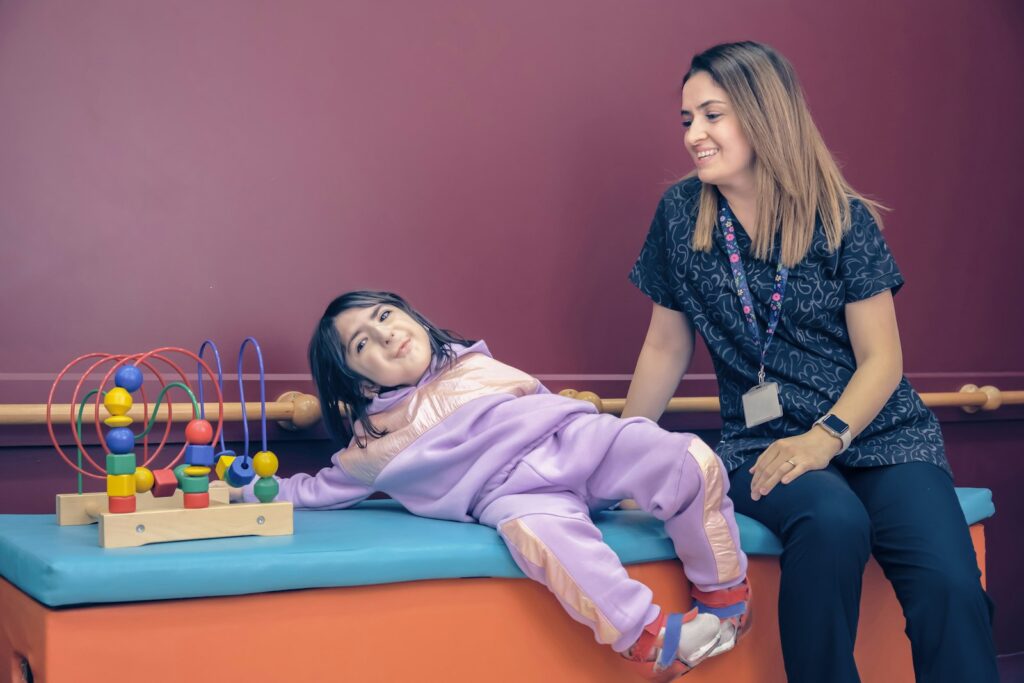
How an assessment works
A conversation first
We start with the person and the people around them: strengths, needs, routines and what success would look like.
Structured assessment
Access methods, positioning, vision, language and cognition, assessed with the person, not just about them.
Hands-on trials
Candidate solutions tried in the session and, where useful, loaned for structured trials in real life.
A clear report
Findings, recommendations and costed options in writing, suitable for funders, schools and clinical records.
Assessments that fit around you
At home
Real routines, real environments. Often the truest picture of what will work.
At school or clinic
Joint sessions with teachers, SLTs and OTs, so the whole team owns the outcome.
At our centres
The full equipment range in one place for comparison and trial.
Assessments: common questions
What happens in an assistive technology assessment?
An assessment starts with a conversation about the person, their goals and routines, then a structured look at access methods, positioning, vision, language and cognition. Candidate solutions are tried in the session, and you receive a written report with recommendations and costed options.
Where do assessments take place?
At home, at school or clinic, or at our centre in Dubai. Home sessions show real routines, joint sessions bring teachers and therapists into the outcome, and our centre has the full equipment range for comparison and trial.
Is there any obligation to buy after an assessment?
No. Every recommendation starts with an assessment, and there is no obligation and no shortcut to a product. The written report is suitable for funders, schools and clinical records.
How do I choose the right assistive technology?
The right assistive technology is chosen through a collaborative assessment with a team of professionals, never as a solo decision. Speech and language therapists, occupational therapists and AT specialists use feature matching, comparing the user's strengths (such as reliable eye movement) with the capabilities of different devices, so avoid buying a device simply because it looked good on social media.
What is the difference between a diagnosis and an assessment?
A diagnosis names the condition, while an assessment identifies what your child can do and what help they need. If the diagnosis is the title of a book, the assessment is the chapters, telling us exactly how to help your child at school, at home and in play.
Book a free assessment
Families, therapists and institutions welcome. Tell us about the person and we will arrange the right session.
Email us
info@consortworld.com
Call us
+971 4 431 4400
Visit us
Office 1102, The Dome Tower, Cluster N, JLT, Dubai